5 Study Skills That Actually Work: Recall, Spacing, Testing
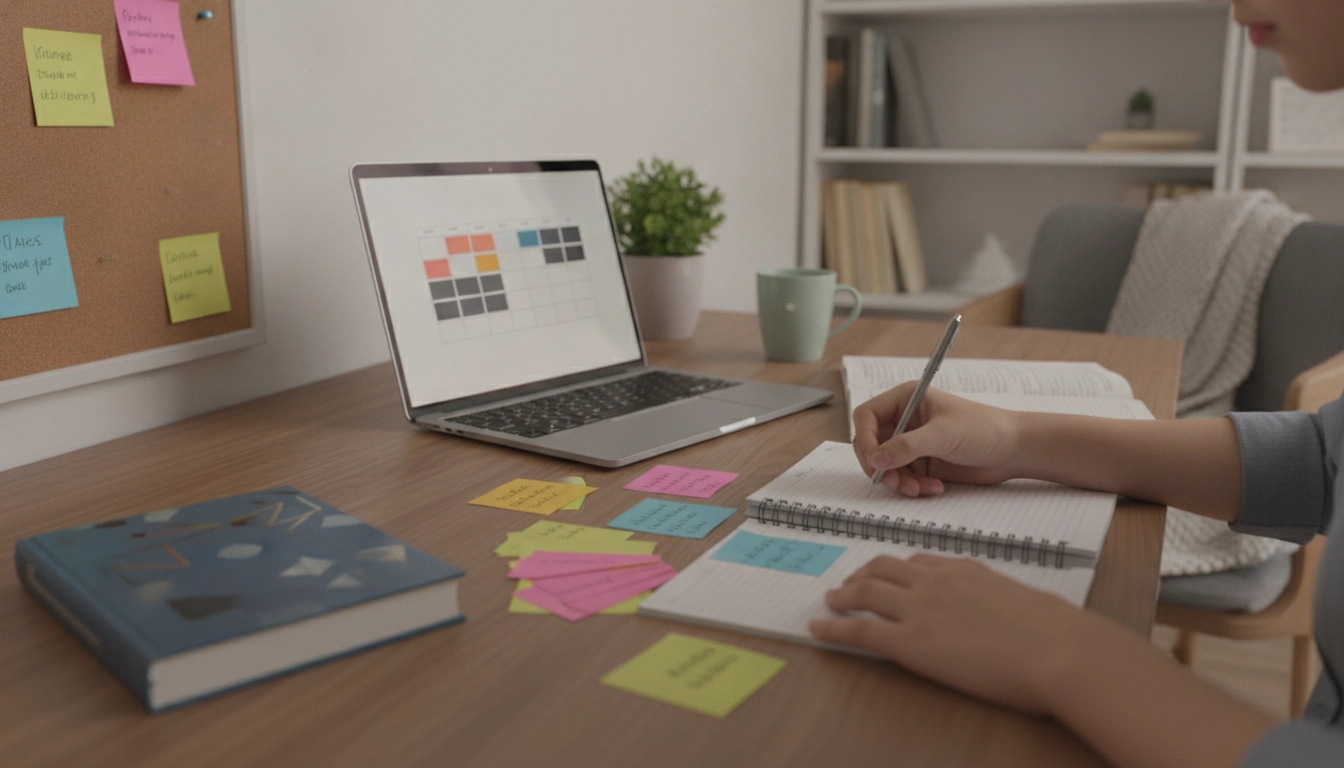
What are 5 study skills?
Five practical study skills that improve learning and test performance are: active recall, spaced repetition, focused study blocks, smart note-taking, and self-testing with review. Together, they help you understand material faster, remember it longer, and spot weak areas before an exam.
1) Active recall
Instead of rereading, pull the information from memory: answer questions, explain concepts out loud, or write what you remember without looking. This builds stronger retrieval pathways than passive review.
2) Spaced repetition
Review material multiple times over days or weeks, gradually increasing the time between sessions. Spacing makes forgetting slower and recall more reliable when you’re under pressure.
3) Focused study blocks (distraction control)
Use short, timed sessions (like 25–50 minutes) with a single goal, then take a brief break. Put your phone away, close extra tabs, and choose one task so your brain isn’t constantly switching gears.
4) Smart note-taking
Take notes that capture meaning, not transcripts. Use headings, bullet points, and quick summaries in your own words, then turn key ideas into questions you can practice later.
5) Self-testing with targeted review
Quiz yourself early and often using practice questions, flashcards, or past exams. When you miss something, review that specific concept and test again—this is more efficient than rereading everything.
For a deeper walkthrough of these techniques (plus ways to apply them to real exams), visit the full guide: study skills that work.
For 5 Study Skills That Actually Work: Recall, Spacing, Testing, the best answer depends on fit, material, care instructions, and how the product will be used day to day.
Checking those details first helps avoid a poor match and keeps the choice practical after delivery.
For 5 Study Skills That Actually Work: Recall, Spacing, Testing, the best answer depends on fit, material, care instructions, and how the product will be used day to day.
FAQ
How do I study effectively when I have little time?
Prioritize high-yield topics, study in focused blocks, and use active recall instead of rereading. End each session with a quick self-test to confirm what actually stuck.












Leave a comment