Safe Space Mapping Guide: Build a Plan You Can Use
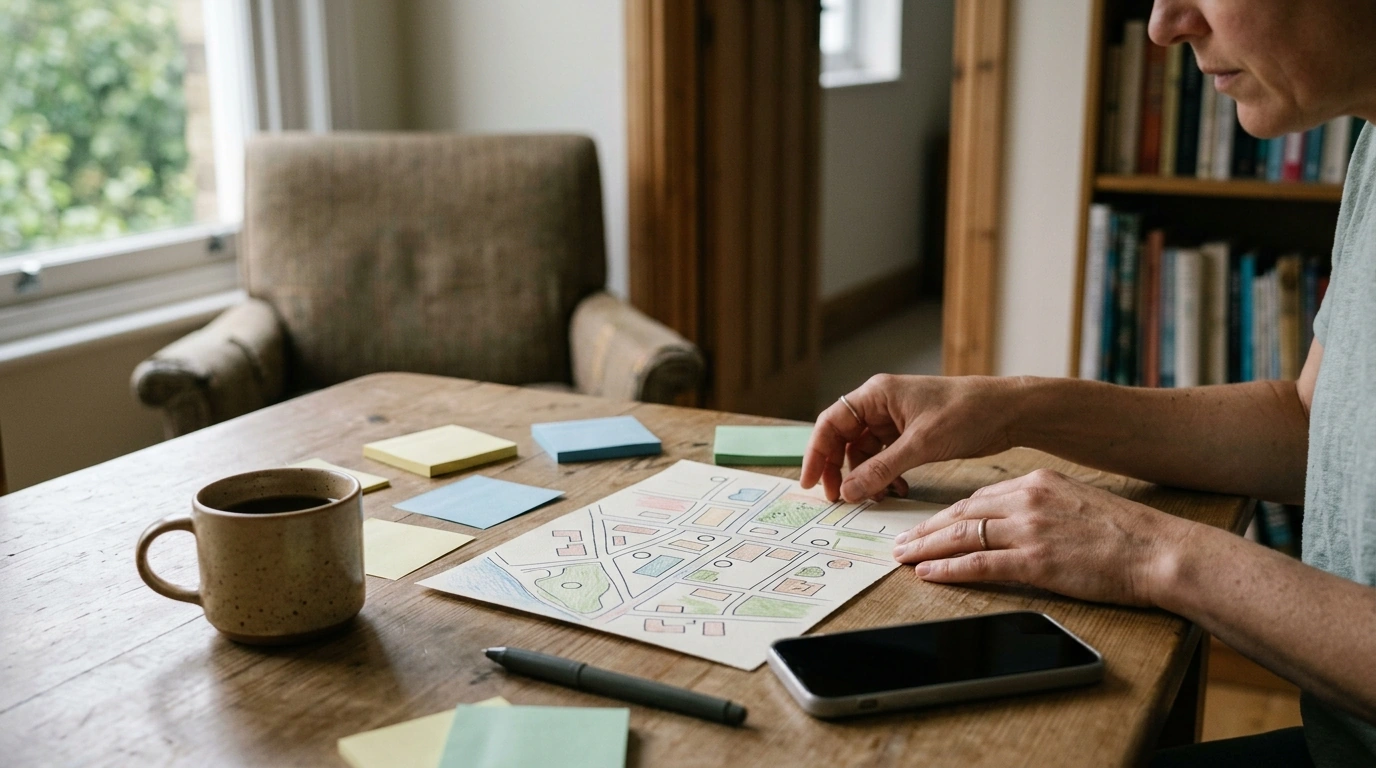
Safe Space Mapping: A Practical Guide to Understanding, Creating, and Using Safe Spaces
Safe space mapping is a practical way to identify where support exists, where risks show up, and what resources can be activated in moments that matter. It turns “I need somewhere safe” into a clear set of options you can actually use—at home, at work, at school, or out in the community—without having to improvise when you’re already overwhelmed.
What “Safe Space” Means in Practice
A “safe space” usually involves two layers working together: physical safety and emotional safety. Physical safety includes the environment (lighting, locks, visibility, exits), access (transportation, hours, entry rules), and boundaries (who can enter, what happens if someone shows up uninvited). Emotional safety is about respect, consent, predictability, and the sense that you won’t be mocked, pressured, or punished for asking for what you need.
Safety is also contextual. A coffee shop may feel secure to one person and risky to another depending on identity, lived experience, or power dynamics—like whether someone is being targeted, followed, or routinely interrupted. The goal isn’t a perfect place that guarantees comfort 100% of the time; it’s a reliable set of “safe enough” options that reduce harm, increase support, and create room to make better decisions.
Key components worth watching for include: privacy (or at least a low-drama corner), respectful communication, clear expectations, easy access to exits or transportation, and supportive people nearby who can help without escalating the situation.
Why Mapping Helps: From Vague Comfort to Actionable Support
Stress changes how the brain handles choices. Safe space mapping works because it replaces a foggy wish (“I need a safe place”) with a short, usable menu of next steps. Instead of searching your memory for who to call or where to go, you follow a plan you already tested when you were calm.
Mapping also reveals gaps early—like having plenty of daytime support but nothing after 9 p.m., or having people you trust but no private location to decompress. Those gaps can be addressed before a crisis hits by adding backups (a second friend, a 24/7 line, a late-night public location, or a digital support option).
It’s useful across scenarios: conflict at home, harassment at school, panic on public transit, sensory overload in crowded events, or workplace tension. It also encourages proactive boundary-setting—simple conversations and expectations that are far easier to establish ahead of time than in the middle of an argument.
How to Build a Safe Space Map (Step-by-Step)
Step 1 — Define your “safe enough” criteria
Write what safety means for you when you’re stressed: preferred noise level, privacy, lighting, accessibility needs, distance to help, and rules around contact (for example, “no surprise visitors” or “no discussion until I’ve had 20 minutes”). Keep it realistic—criteria should guide choices, not eliminate every option.
Step 2 — List categories: places, people, routines, and services
Include physical locations (home, library, community center), trusted people, grounding routines (walk route, breathing sequence, journaling), and services (therapist, HR contact, campus office, hotlines). Add online supports too—just treat them as one layer, not the only layer.
Step 3 — Rate each option on reliability
Step 4 — Add triggers and early warning signs
Step 5 — Add immediate actions and a fallback
Step 6 — Review monthly
Safe Space Mapping Template: Quick Reference Table
| Type | Option | When to Use | Access Steps | Limitations | Backup |
|---|---|---|---|---|---|
| Place | Quiet room at home | Overwhelm, conflict, fatigue | Close door; headphones; 10-minute timer | Not safe during arguments | Walk to nearby library |
| Person | Trusted friend | Need reality check or support | Text: “Can you talk for 10 minutes?” | May be busy | Call a hotline or another contact |
| Service | Counselor/therapist | Recurring stress, pattern change | Book session; keep notes | Not immediate | Crisis line/urgent care if needed |
| Routine | Grounding walk route | Anxiety spike, rumination | Shoes on; keys; pre-set route | Weather/time constraints | Indoor stretch + breathing plan |
| Digital | Supportive online community | Late-night loneliness | Open app; pinned resources; DM mod | Variable quality/safety | Offline coping list + music |
Creating Safer Spaces for Groups (Schools, Workplaces, Community)
Using Your Map in Real Moments
Digital Safety and Privacy Tips for Mapping
When using online communities, verify basic safeguards like moderation, reporting tools, and clear guidelines. Keep a minimal offline backup—key phone numbers and two steps to take—so you aren’t stranded by low battery or no internet. For immediate help in the U.S., the 988 Suicide & Crisis Lifeline is available 24/7. For substance use treatment referrals and information, the SAMHSA National Helpline is another reliable starting point. For broader guidance on mental health during emergencies, see the WHO’s mental health in emergencies overview.
Helpful Digital Guides (In Stock)
- A Guide to Safe Space Mapping | Digital Ebook on Understanding, Creating & Using Safe Spaces
- Essential Adult Skills Guide | Budgeting, Communication, Media Literacy & Life Management Tips for Everyday Success
- Meaningful Conversation Starter Guide | Printable Guide for Dating, Friendship & Networking | Deep Questions & Prompt Examples
FAQ
What is safe space mapping?
Safe space mapping is a structured way to identify and organize supportive places, people, routines, and services so you can reach them quickly. It includes clear access steps (what to do first) and backups in case the first option isn’t available.
How do you create a safe space at home or in a shared living situation?
Start small: set clear boundaries, designate a quiet area, and agree on simple signals (like “I need a pause”). Add sensory supports (headphones, lighting choices) and plan what to do during conflict when privacy is limited.
Is a “safe space” always a physical place?
No—safe spaces can also be a trusted person, a grounding routine, a professional service, or a carefully chosen digital support. Having multiple types increases reliability when one option isn’t accessible.











Leave a comment